Webb telescope observations clarify nature of mysterious little red dots
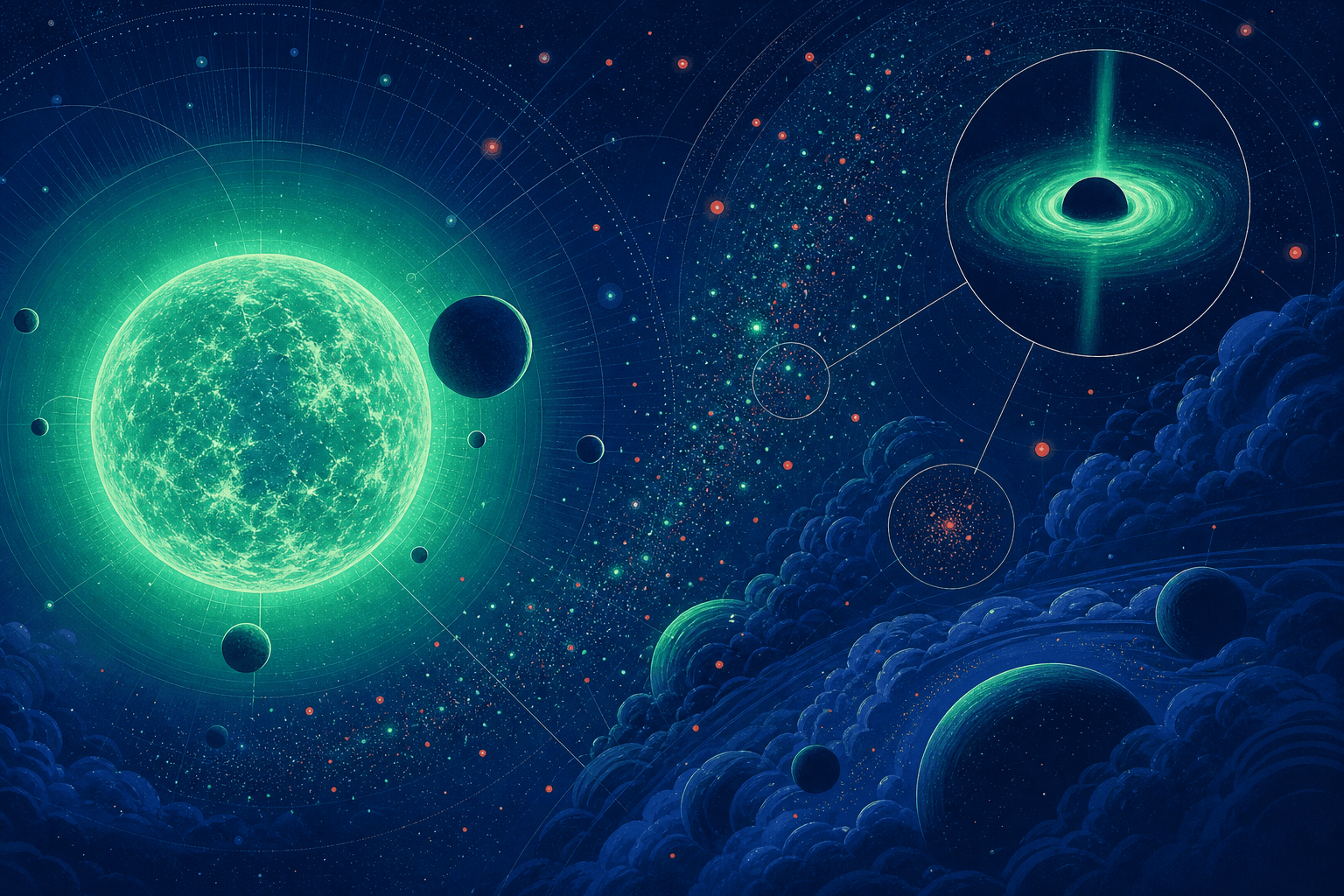
New findings suggest that enigmatic compact objects in the early universe are massive, short-lived stars that may have seeded the first supermassive black holes.
Reporting and analysis tagged black holes.

New findings suggest that enigmatic compact objects in the early universe are massive, short-lived stars that may have seeded the first supermassive black holes.

New research suggests that massive stellar objects could be the missing link in understanding both mysterious infrared signatures and the rapid formation of primordial black holes.

New research confirms that the enigmatic objects observed in the early universe are supermassive black holes in a phase of rapid growth, rather than evidence of new physics.

New research suggests that invisible primordial black holes could be responsible for triggering certain white dwarf explosions, leaving distinct chemical signatures in the Milky Way.

Researchers have identified a maximum entropy rule that accurately forecasts the mass and spin of remnant black holes following cosmic collisions.

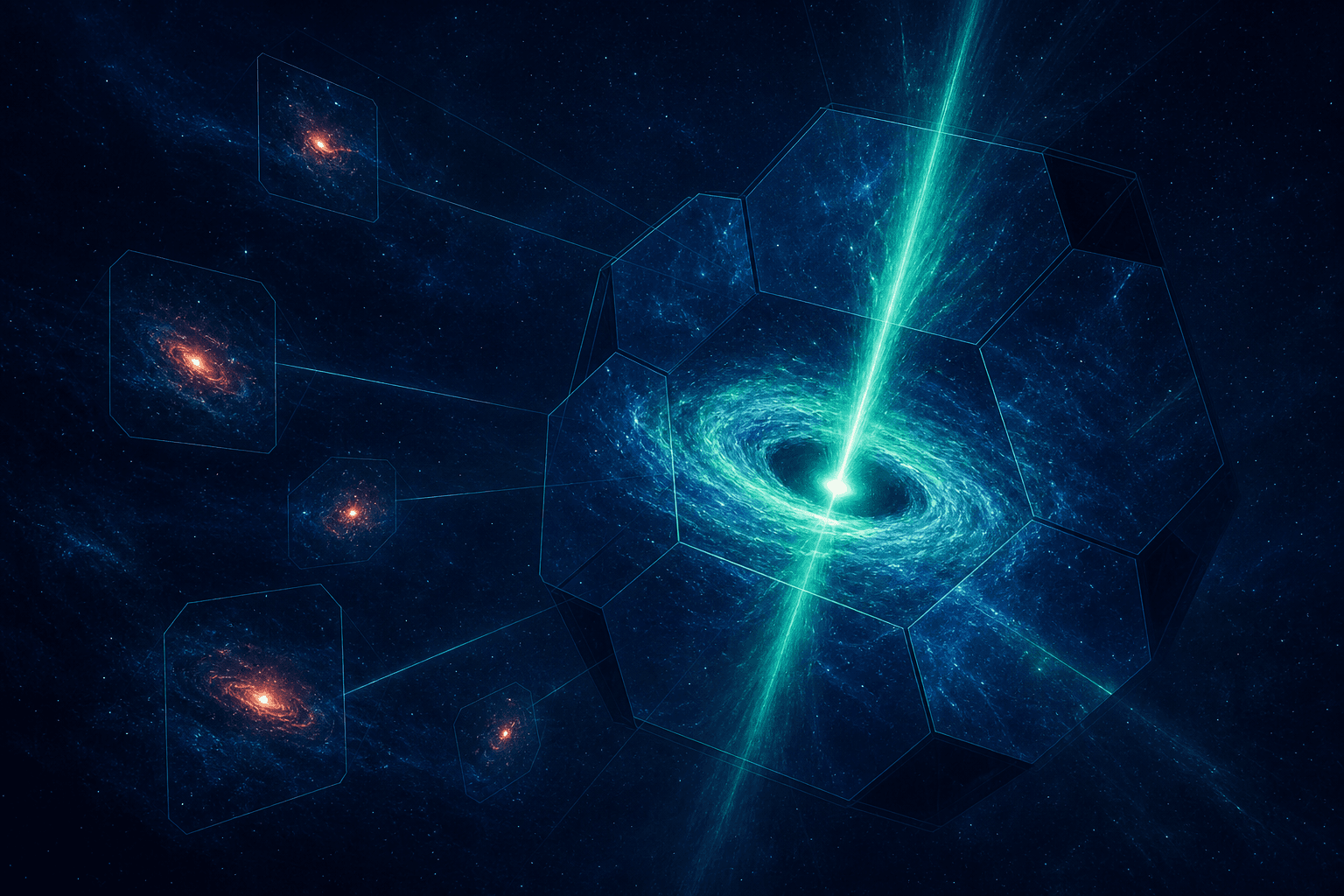
New kinematic data from the James Webb Space Telescope confirms the mechanism that sustains active galactic nuclei by funneling cold gas into circumnuclear disks.

New research indicates the upcoming observatory will identify tidal disruption events from billions of years ago to resolve long-standing debates over supermassive black hole formation.

New observational data confirms the presence of spacetime vortices around merging black holes, providing a new method for testing general relativity.

New observations of a hyper-luminous quasar reveal a complex, stratified wind structure that challenges existing models of black hole feedback.

New infrared data from the Centaurus cluster demonstrate how large-scale filamentary networks directly fuel the growth of central black holes.