Researchers have identified a specific gravitational wave signature that provides direct evidence of frame dragging near the event horizon of merging black holes. This discovery, published in Nature, provides new observational data on strong gravity environments that were previously beyond the reach of direct verification.
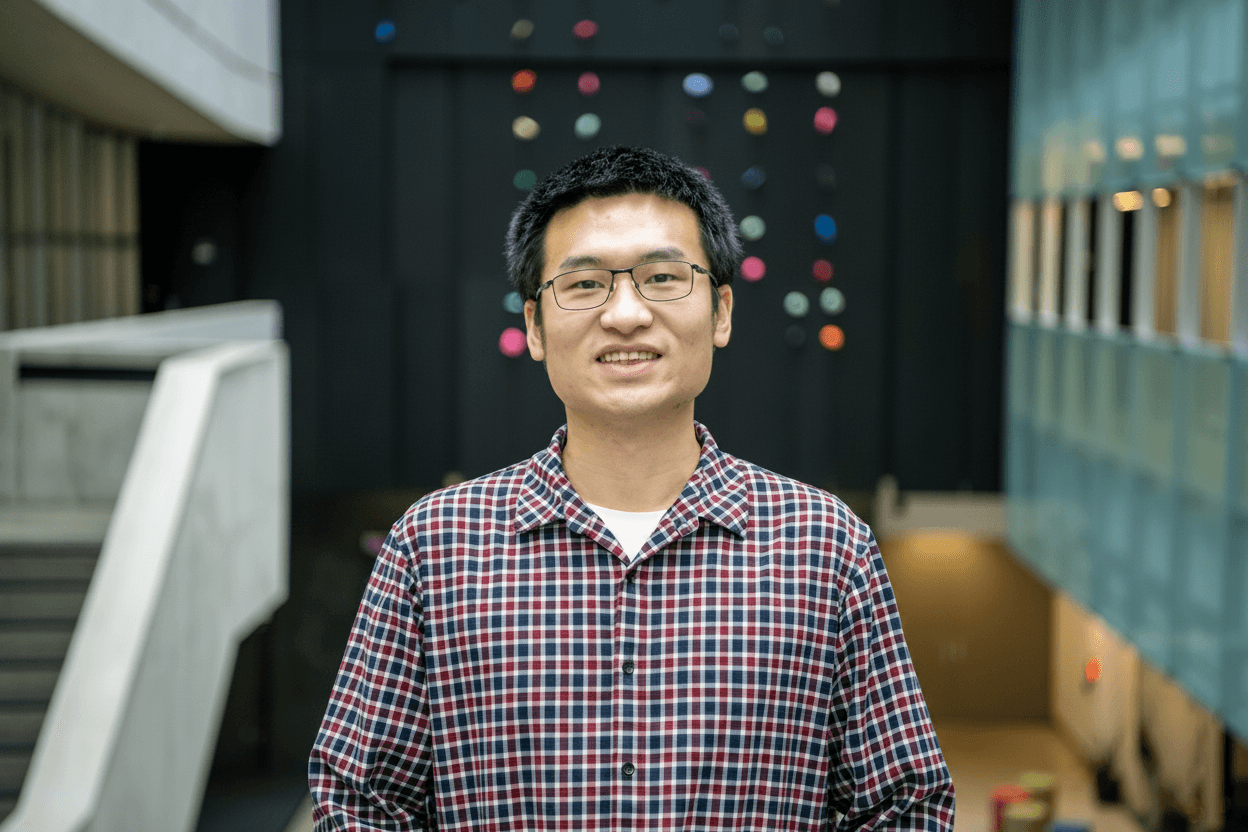
Sizheng Ma, a postdoctoral researcher at the Perimeter Institute, led the investigation alongside colleagues Neil Lu, Ornella J. Piccinni, Yanbei Chen, and Ling Sun. The team analyzed data from the GW250114 event, a gravitational wave signal captured by the Laser Interferometer Gravitational-wave Observatory on January 14, 2025. This event involved two black holes, each approximately 30 to 40 times the mass of the sun, colliding at a distance of 1.3 billion light years.
Frame dragging occurs when a massive, rotating object creates a vortex that twists the surrounding spacetime. While the phenomenon is a fundamental prediction of Albert Einstein’s general relativity, observing it in the context of a black hole merger requires extreme precision. The team compared theoretical models of these spacetime distortions against the actual signal detected by the observatory.
Because the GW250114 event was exceptionally loud and clear due to a decade of technological improvements in noise reduction, the researchers could confirm their predictions with high statistical confidence. The signal captured in 2025 allowed for a level of detail that was not possible during the initial detection of gravitational waves in 2016. This clarity was essential for isolating the specific oscillations caused by the frame dragging effect.
The process involved two distinct phases of research. First, the team developed a theoretical framework to interpret how the physics of a merger would manifest as an oscillation in a gravitational wave signal. Second, they applied this framework to the observational data to isolate the specific signature of the frame dragging effect. This methodology effectively transforms gravitational wave data into a diagnostic tool for probing the immediate vicinity of an event horizon.
The findings reinforce the accuracy of general relativity in the most extreme gravitational regimes. Ma noted that the observed signal aligned precisely with the mathematical predictions established by Einstein over a century ago. By mapping these wave patterns, the researchers have created a new mechanism for analyzing the dynamics of black hole collisions. This approach allows scientists to extract physical properties from the remnant object that were previously obscured by the complexity of the merger process.
The significance of this work extends beyond the confirmation of existing theories. By providing a more precise method for observing the strong gravity regime, the tool developed by Ma and his colleagues offers a method for testing the limits of current physics. Many researchers are looking for subtle deviations from general relativity that might indicate where the theory fails to reconcile with quantum mechanics. The event horizon, where gravity reaches its peak intensity, remains the primary location for such investigations.
This research provides a necessary bridge between theoretical physics and observational astronomy. By verifying that gravitational waves carry the imprint of the remnant object’s properties, the team has established a new standard for interpreting future signals. The ability to measure these distortions directly confirms that the spacetime around a black hole is as tempestuous as the mathematical models suggested.
Future research will focus on refining these models to account for the evolution of signals over time. Ma, who is set to join Johns Hopkins University and has been awarded a NASA Hubble Fellowship, plans to expand the theoretical foundation of this work. His upcoming projects aim to move beyond initial models to create exact calculations of how these spacetime distortions behave throughout the duration of a merger. This evolution in modeling will likely provide deeper insights into the nature of gravity and the fundamental structure of the universe.