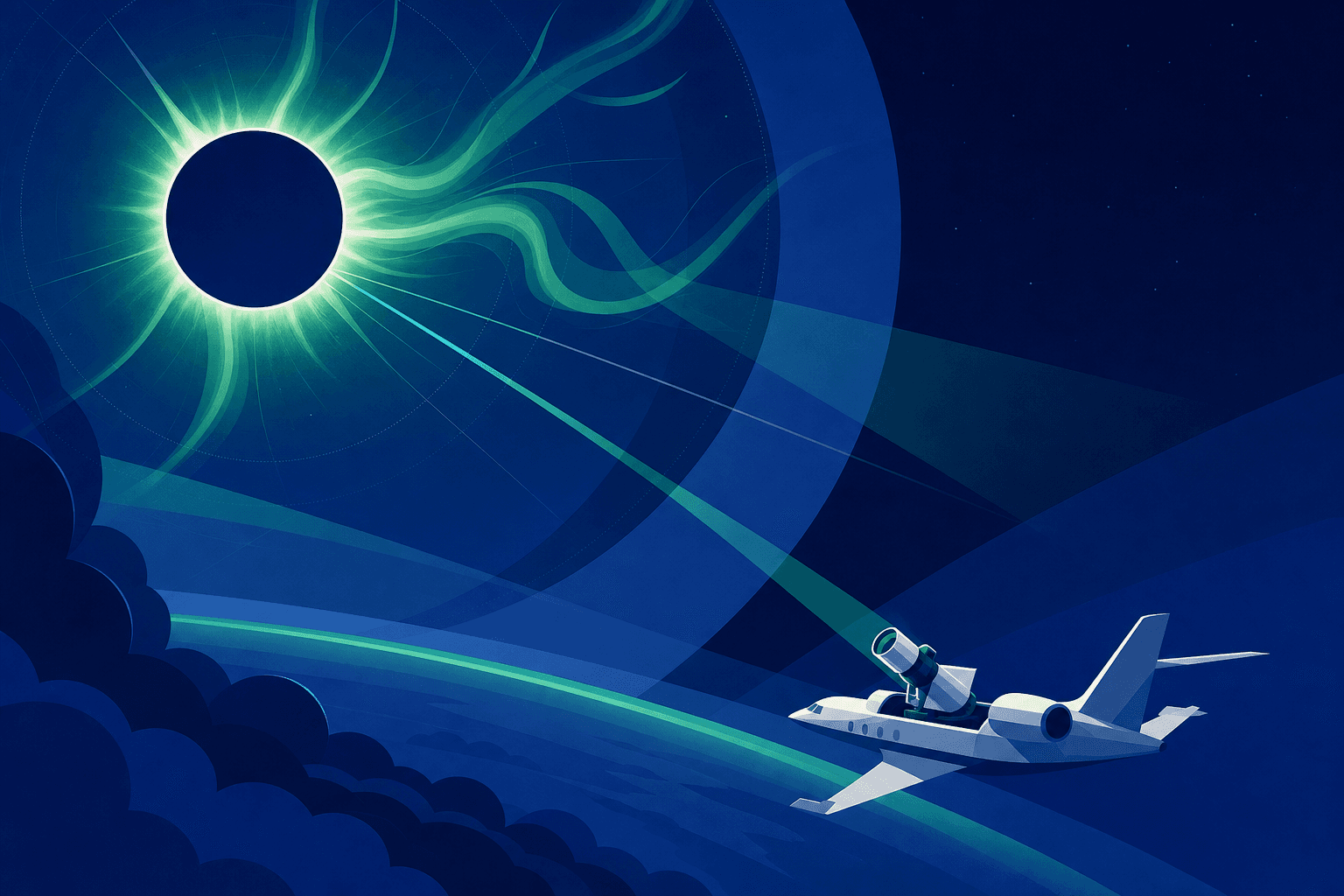
Researchers deploy airborne telescope to probe solar corona mysteries
An international team will utilize an Irish Air Corps aircraft to capture high-resolution data on the Sun’s magnetic field during the upcoming total solar eclipse.
No. 215
Charting the observable universe — and the capital, instruments, and institutions racing to measure it.
An international team will utilize an Irish Air Corps aircraft to capture high-resolution data on the Sun’s magnetic field during the upcoming total solar eclipse.
New observations from the LHAASO observatory reveal that a binary star system accelerates particles to energies thirty times higher than previously thought possible.
New imaging data from the Very Large Telescope reveals a stellar companion orbiting the famous red supergiant, fundamentally altering models of its evolutionary path.
The second eROSITA data release provides a comprehensive census of the X-ray sky, finally identifying the stellar populations responsible for the Milky Way’s mysterious ridge glow.
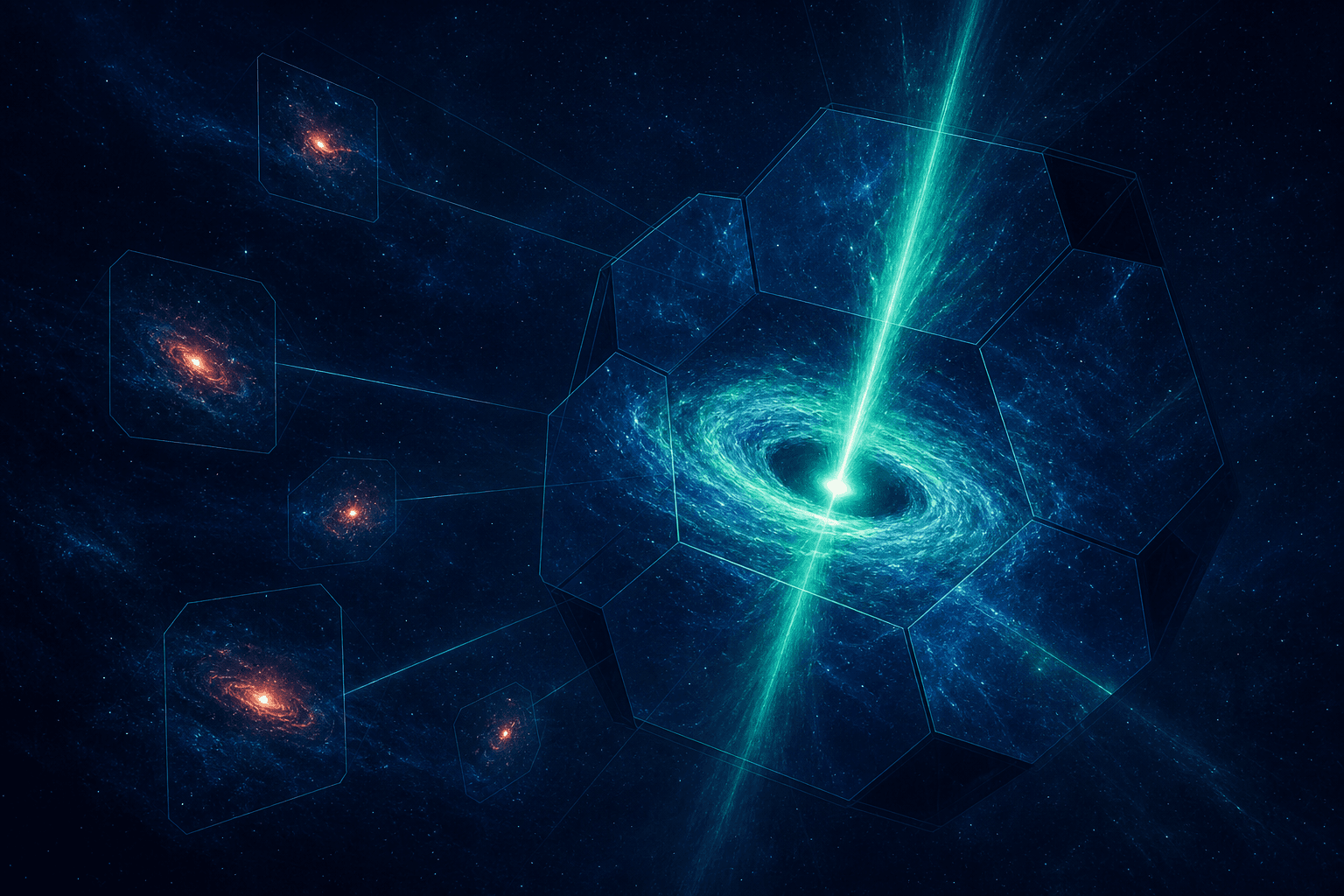
New research confirms that the enigmatic objects observed in the early universe are supermassive black holes in a phase of rapid growth, rather than evidence of new physics.
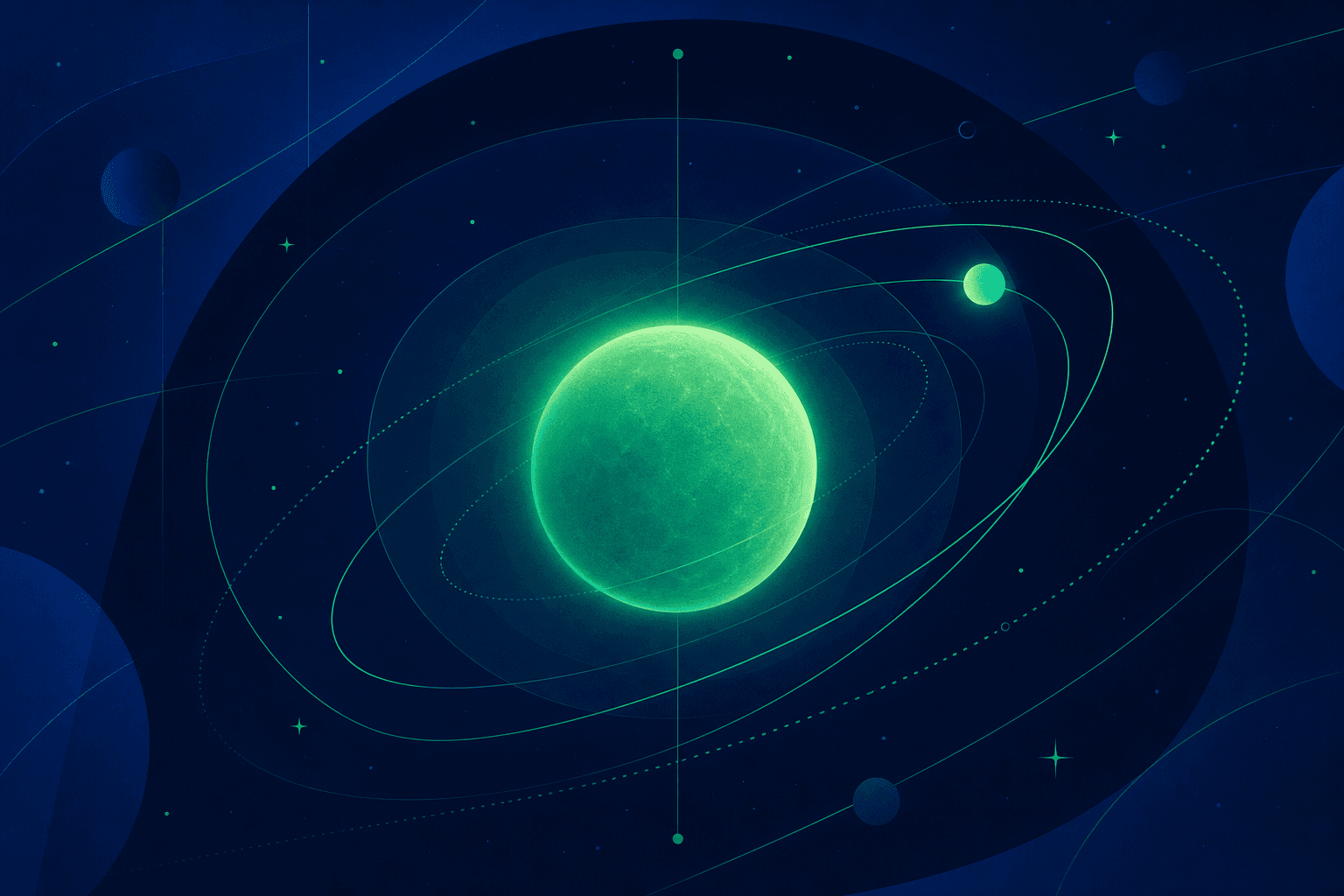
New imaging data from the Very Large Telescope has identified a faint companion star orbiting Betelgeuse, resolving a long-standing mystery in stellar evolution.
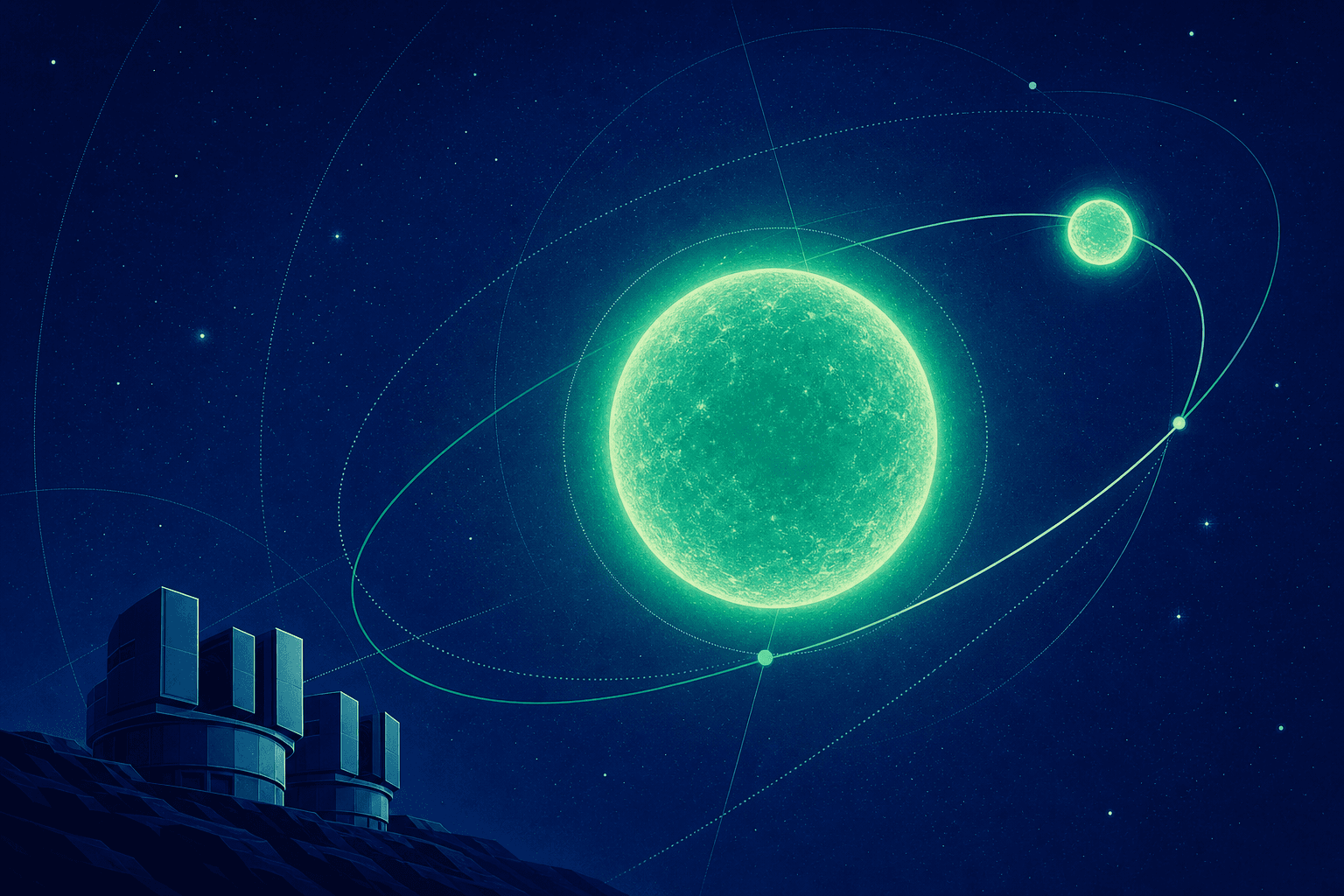
New observations from the Very Large Telescope reveal a massive companion orbiting the red supergiant, ending a century of speculation regarding the star’s nature.

New research suggests that invisible primordial black holes could be responsible for triggering certain white dwarf explosions, leaving distinct chemical signatures in the Milky Way.

Researchers at the Facility for Rare Isotope Beams have resolved a long-standing mystery regarding gamma-ray emissions in atomic nuclei.

The detection of escaping helium on a distant rocky world provides new evidence that terrestrial planets can maintain stable atmospheres in habitable zones.