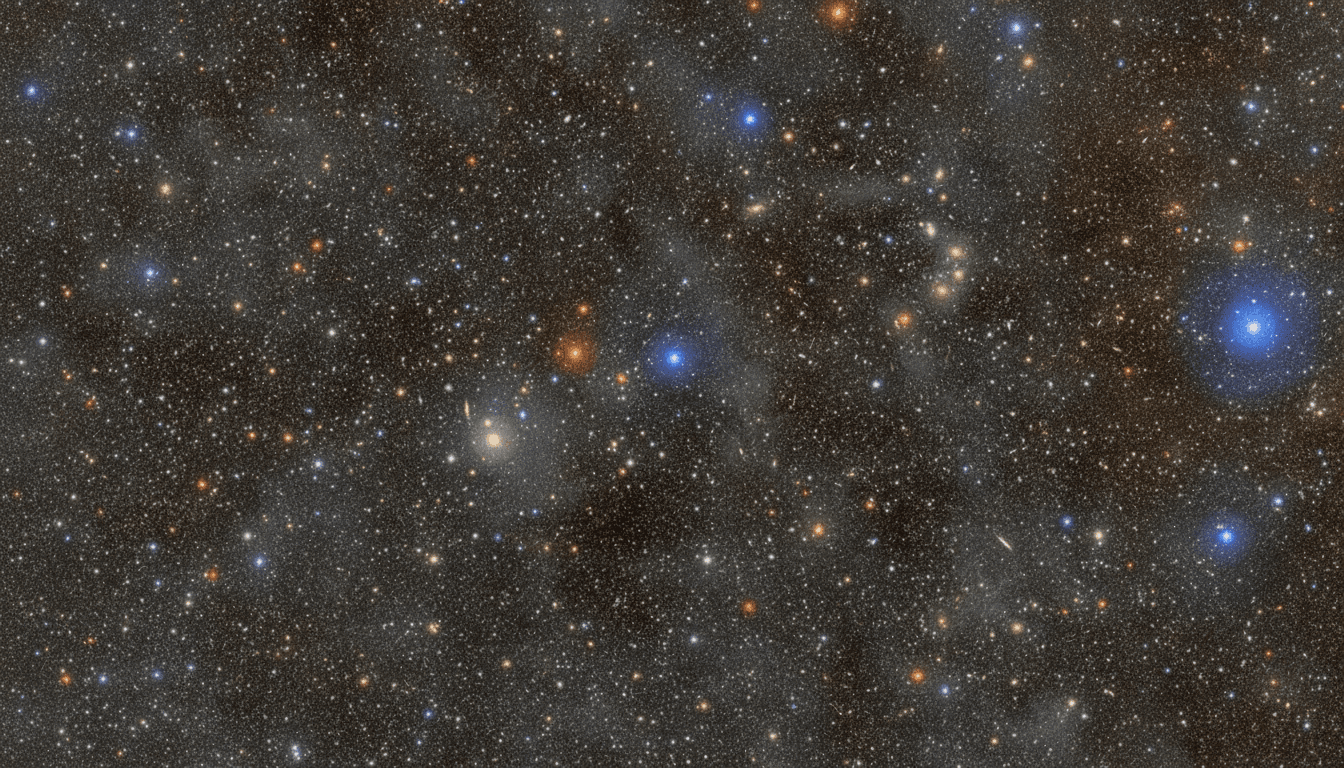
The NSF–DOE Vera C. Rubin Observatory has officially commenced its decadal Legacy Survey of Space and Time, marking the beginning of a systematic effort to map the southern sky with unprecedented temporal resolution. Located on Cerro Pachón in Chile, the facility is now executing a continuous observation cycle that captures high-resolution imagery of the celestial sphere every 40 seconds.
This operational phase follows a rigorous period of system integration, performance verification, and scientific validation protocols. The observatory utilizes a 3,200-megapixel digital camera, which serves as the primary instrument for the survey’s extensive data collection requirements. By repeatedly imaging the same regions of the sky, the telescope creates a comprehensive time-lapse record of the universe.
The survey architecture is designed to generate approximately 10 terabytes of raw data during each night of operation. This volume of information necessitates automated processing systems capable of issuing up to seven million alerts per night regarding transient cosmic events. These notifications allow the global astronomical community to coordinate follow-up observations on rapidly changing phenomena.
Researchers anticipate that the survey will facilitate the identification of numerous celestial objects, including supernovae, variable stars, and black holes. The project builds upon the success of the initial commissioning phase, which identified over 11,000 new asteroids. This includes a significant number of near-Earth objects and distant trans-Neptunian bodies that were previously undetected.
The optical design of the telescope features a wide-field three-mirror anastigmat configuration, which provides a massive field of view while maintaining high image quality across the entire focal plane. This specialized design allows the camera to capture a patch of sky roughly 40 times the area of the full moon in a single exposure. Such efficiency is critical for the survey’s goal of covering the entire southern sky every few nights.
Data processing algorithms are equally vital to the mission’s success, as they must distinguish between genuine cosmic transients and instrumental artifacts in real time. The software pipeline employs sophisticated machine learning techniques to classify light curves and identify anomalous behavior in stellar objects. This automated classification ensures that the most scientifically significant events are prioritized for immediate follow-up by external observatories.
The U.S. National Science Foundation and the U.S. Department of Energy oversee the mission, which represents a synthesis of international scientific cooperation and advanced optical engineering. The resulting database will eventually contain information on billions of celestial objects and trillions of individual measurements. Regular public data releases are scheduled to ensure that the global scientific community and citizen scientists can access the findings.
The primary scientific objective of the survey involves investigating the fundamental nature of dark matter and dark energy. By mapping the distribution and movement of matter over a ten-year period, researchers intend to constrain the parameters of cosmic expansion and galaxy evolution. This data will also enable a detailed structural analysis of the Milky Way galaxy.
Multi-messenger astronomy stands to benefit significantly from the rapid alert system integrated into the observatory’s workflow. When the telescope detects a transient event, the automated pipeline provides the necessary coordinates for other ground-based and space-based observatories to pivot their sensors. This coordination is essential for capturing the fleeting signatures of high-energy astrophysical events.
The shift from static imaging to a time-domain survey model reflects a broader transition in modern astrophysics toward monitoring the evolution of the cosmos. By treating the sky as a dynamic environment rather than a fixed backdrop, the Rubin Observatory enables the study of phenomena that occur on timescales ranging from seconds to years. This approach provides the statistical power required to refine current cosmological models.
Future milestones for the mission include the periodic release of processed data sets to the public domain. These releases will serve as the foundation for subsequent research papers and academic investigations into the history of the universe. The long-term stability of the observation schedule remains a critical watchpoint for ensuring the integrity of the ten-year data set.