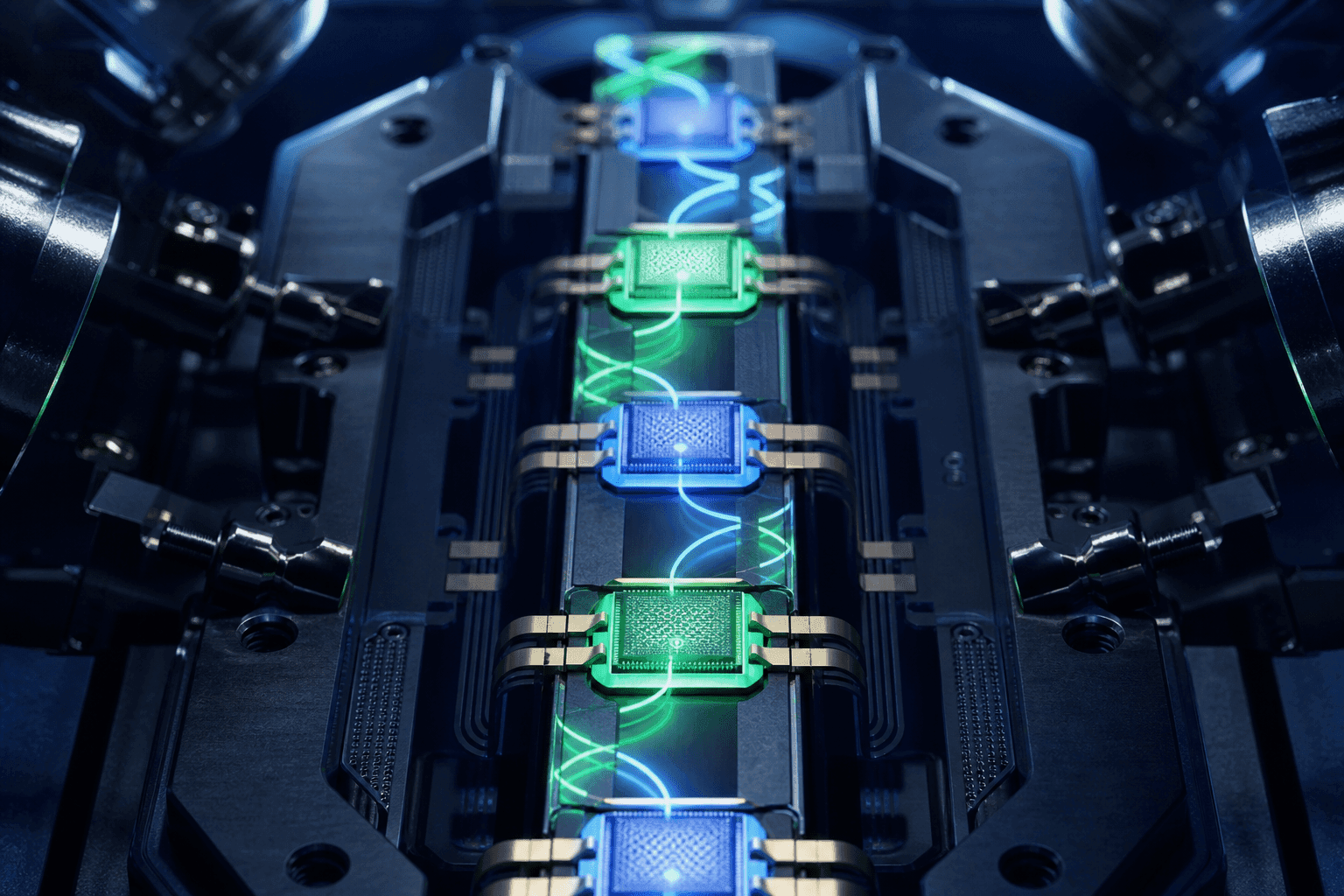
Europe has achieved a significant milestone in synchrotron research with the deployment of the continent’s first Transition Edge Sensor (TES) spectrometer at the BESSY II facility. This advanced instrument, which began operations in June 2026, provides researchers with a detection efficiency for X-ray photons that is 100 to 1,000 times greater than traditional wavelength dispersive spectrometers.
The project represents a collaborative effort between the Helmholtz-Zentrum Berlin (HZB), the Max Planck Institute for Chemical Energy Conversion (MPI-CEC), and the National Institute of Standards and Technology (NIST). By integrating this technology into the BESSY II UE52-SGM beamline, the team has established a new standard for analyzing materials that were previously inaccessible due to their low concentration or atomic thinness.
Synchrotron facilities rely on X-ray emission spectroscopy (XES) and Resonant Inelastic X-ray Scattering (RIXS) to probe the electronic structure of matter. These techniques typically require a high density of emitted photons to generate actionable data, which historically restricted their application to bulk samples. The new TES array overcomes this limitation by capturing and measuring individual photons with unprecedented efficiency.
Régis Decker, a scientist at HZB responsible for the new instrument, emphasizes the significant potential of this increased sensitivity. The device utilizes an array of 248 superconducting sensors maintained at a cryogenic temperature of 25 milli-Kelvin. This cooling is facilitated by a He4-He3 dilution refrigerator, mirroring the thermal management systems found in modern quantum computing hardware.
When X-rays interact with a sample, the resulting emitted photons strike the superconducting sensors, causing a momentary rise in temperature that disrupts the superconducting state. This disruption triggers a measurable change in electrical resistance, which is detected by circuits based on Superconducting Quantum Interference Devices (SQUIDs). This mechanism allows for the precise determination of each photon’s energy, even in extremely dilute systems.
The calibration process for this array involves rigorous baseline stabilization to ensure that the transition from the superconducting state to the normal state occurs within a precise temperature window. By maintaining this delicate balance, the sensors can distinguish between minute energy differences in emitted photons that would otherwise be lost in background noise. This level of precision is essential for characterizing the electronic band structures of quantum materials.
The spectrometer is integrated with a specialized ultra-high vacuum chamber designed for precise sample manipulation across a temperature range from 10 K to room temperature. This setup enables the study of atomic monolayers, complex nanostructures, and molecular systems that were once beyond the reach of standard spectroscopic methods. Researchers can now complete measurements in minutes that previously required hours of data collection.
The deployment of this spectrometer at BESSY II fills a critical gap in the global research infrastructure. Before this installation, only five such instruments were in operation worldwide, with four located in the United States and one in Japan. The addition of this capability in Europe provides a new resource for scientists investigating quantum properties and molecular chemistry.
The significance of this development lies in its ability to bridge the gap between bulk material analysis and the study of reduced-dimension systems. By providing a clearer view of electronic band structures, the TES spectrometer complements existing techniques like Angle-Resolved Photoemission Spectroscopy (ARPES). This integration allows for a more comprehensive understanding of how electronic properties emerge at the nanoscale.
The technical design also accounts for future experimental requirements, including the addition of magnetic field capabilities. These planned upgrades will facilitate advanced studies in X-ray Magnetic Circular Dichroism and related emission techniques. The research team is currently accepting proposals from the scientific community to utilize the instrument for upcoming experimental cycles.
The successful implementation of this technology underscores the importance of cryogenic sensor arrays in advancing fundamental physics and materials science. As the facility begins to process new research proposals, the scientific community anticipates a surge in data regarding the electronic properties of previously unobservable systems. Future milestones will focus on expanding the sample preparation suite and refining the integration of magnetic field environments for broader experimental applications.