A comprehensive analysis of galaxy clusters has provided the most precise measurement of matter density and clumpiness in the late universe to date. Researchers unveiled these findings on June 14, 2026, at the 248th Meeting of the American Astronomical Society in Pasadena, California, utilizing data from the German eROSITA X-ray telescope.
The study, led by the Max Planck Institute for Extraterrestrial Physics, constrained the cosmological parameters of matter density and clumpiness to five times the precision of previous experiments. Esra Bulbul, a group leader at the institute and the lead scientist for the eROSITA clusters and cosmology program, presented the results during a plenary lecture. The analysis relies on a catalog of 12,247 galaxy clusters and groups, which comprises the largest collection of such structures ever assembled from X-ray observations.
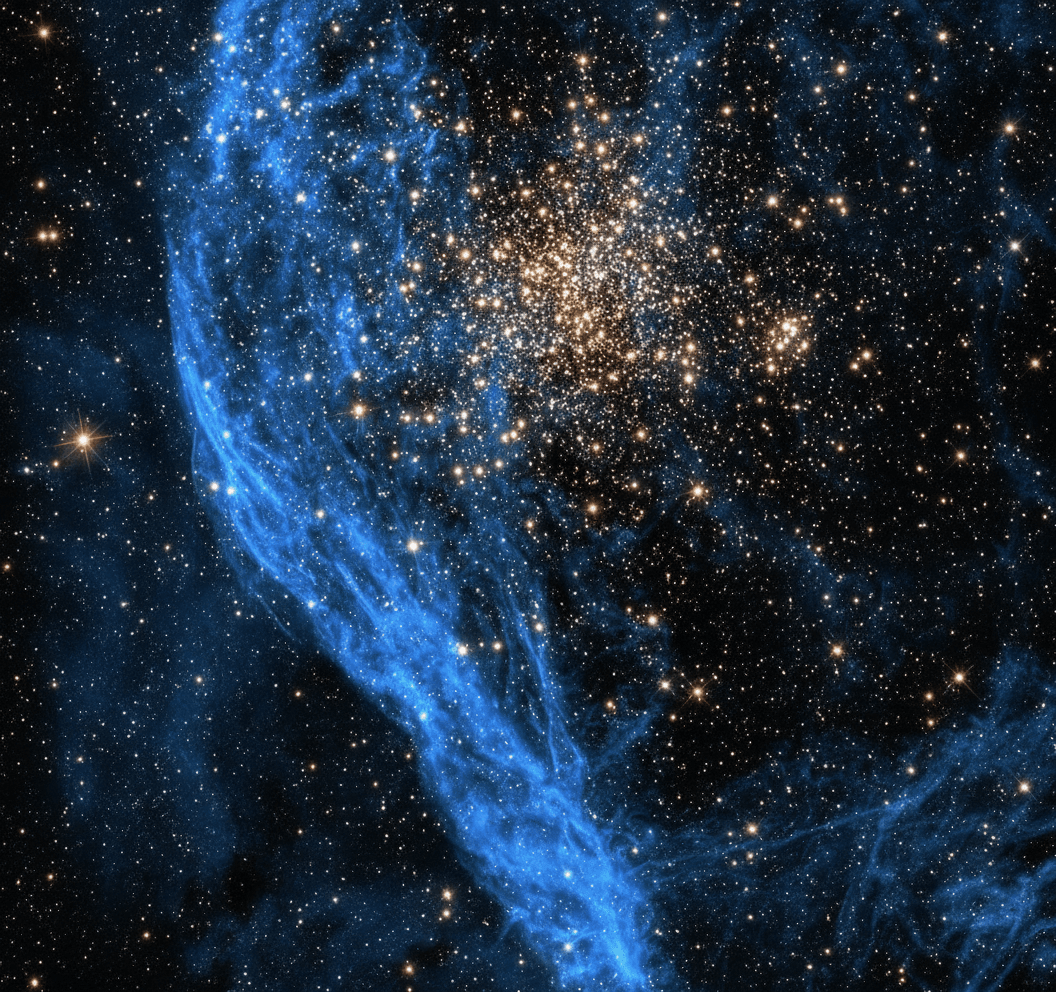
Galaxy clusters serve as critical probes for cosmology because they represent the largest gravitationally bound structures in the universe. These clusters are embedded in halos of superheated gas that emit intense X-ray radiation, allowing eROSITA to detect them across the entire sky. The research team utilized the halo mass function, a theoretical framework that predicts the distribution of dark matter halos across cosmic time, to derive their measurements.
The team calculated these parameters by counting clusters at varying redshifts and comparing the observed distribution to theoretical models. eROSITA measured the X-ray count rates in the 0.3–2.3 keV energy band, which correlates with the thermal Bremsstrahlung emission of the intracluster gas. This method offers a distinct advantage over optical detection by avoiding projection effects where unrelated foreground and background structures align.
Mass calibration remains a central challenge in cluster cosmology, which the team addressed through weak gravitational lensing. By measuring the coherent distortions that massive foreground structures imprint on the shapes of distant background galaxies, the researchers anchored their statistical mass calibration. This rigorous approach ensures that the resulting constraints on matter density and clumpiness are robust against systematic errors.
The process of converting X-ray observables to cluster masses requires precise accounting for the thermal state of the gas. Because the count-rate scatter at a fixed mass is dominated by emission physics rather than environmental contamination, the team achieved a higher level of statistical confidence. This calibration allows for a more accurate mapping of the universe’s large-scale structure compared to previous X-ray surveys.
The findings address a long-standing discrepancy in the field known as the S8 tension, which had persisted for nearly a decade. Previous measurements from the cosmic microwave background, specifically from the Planck satellite, consistently indicated a higher S8 value than those derived from weak gravitational lensing surveys of the mature universe. The new eROSITA data shows full consistency with the Planck predictions, suggesting that the standard Lambda Cold Dark Matter model remains accurate.
The agreement between these datasets implies that the universe has evolved as expected throughout cosmic history. Dr. Vittorio Ghirardini, a postdoctoral researcher at the Max Planck Institute for Extraterrestrial Physics who led the cosmology analysis, noted that the results suggest the standard model does not require immediate revision. This conclusion provides a sense of stability for cosmologists who had previously considered the possibility of modified gravity or unknown dark sector interactions.
The alignment of these measurements suggests that the tension between early and late universe observations may have been a result of measurement limitations rather than new physics. By matching the precision of the cosmic microwave background, the eROSITA team has effectively narrowed the range of viable cosmological theories. This convergence reinforces the validity of the current standard model while setting a new benchmark for future observational efforts.
Beyond the primary cosmological parameters, the survey also provided a direct detection of diffuse hot gas extending 16 million light-years beyond the traditional boundaries of galaxy clusters. This observation confirms that eROSITA is effectively tracing the cosmic web, the vast network of filaments that facilitates the flow of matter into clusters. These peripheral regions contain critical information about the assembly history of the largest structures in the universe.
Future research will likely focus on refining these measurements as the full eROSITA dataset is processed and integrated with other surveys. Astronomers will continue to monitor these parameters to ensure that the current alignment holds as observational precision increases further. The ability to map the cosmic web with such detail improves the resolution of large-scale structure mapping for the entire scientific community.