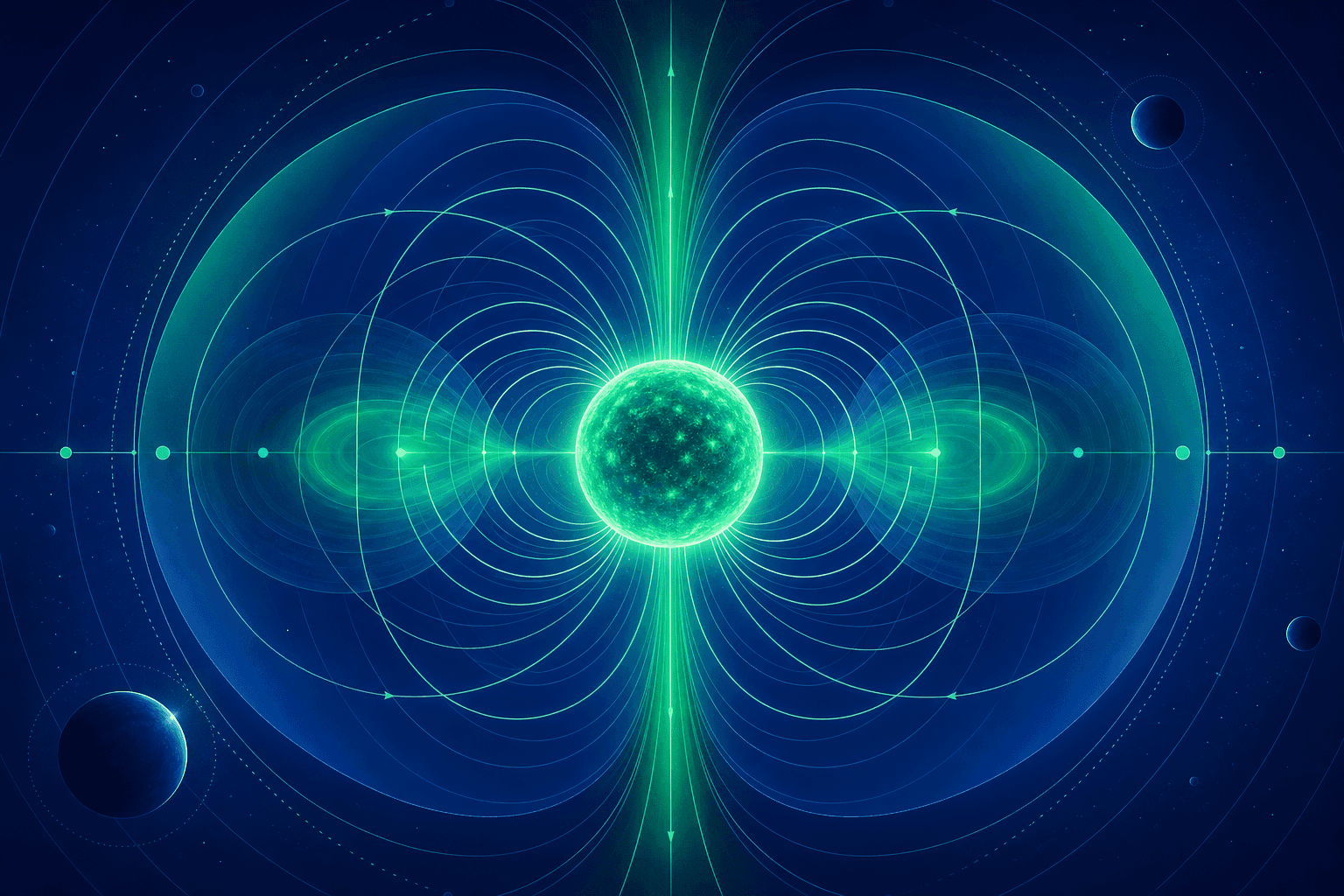
Astronomers have identified the elusive process of ambipolar diffusion within the L1544 prestellar core, providing empirical evidence for how gravity eventually overcomes magnetic support to initiate star formation. This discovery, published in the journal Astronomy & Astrophysics on July 10, 2026, marks the first time researchers have directly observed the drift between charged and neutral particles in such a dense, cold environment.
The study was led by Doris Arzoumanian, an Associate Professor at Kyushu University’s Institute for Advanced Study, alongside Silvia Spezzano, a group leader at the Max Planck Institute for Extraterrestrial Physics. The team utilized the Institute for Radio Astronomy in the Millimeter Range 30-meter telescope to analyze the velocity of specific molecular tracers within the Taurus molecular cloud. Prestellar cores like L1544 represent the initial stage of stellar evolution, existing as frigid, dense pockets of gas and dust where magnetic fields typically act as a barrier to gravitational collapse.
Particles within these cores are not electrically uniform, with ions remaining tethered to magnetic field lines while neutral molecules do not interact directly with them. Under specific density conditions, neutral particles can slip past the ions, a phenomenon known as ion-neutral drift. This relative motion serves as the primary observational signature of ambipolar diffusion, a theoretical process long predicted to weaken magnetic fields within collapsing clouds.
To confirm this drift, the research team selected two specific molecules as tracers: Diazenylium-d1, which is an ion, and para-monodeuterated ammonia, which is a neutral molecule. Because these tracers occupy similar high-density regions, any variation in their observed velocity provides a reliable measurement of the underlying physical shift. The researchers detected a velocity difference of approximately 0.05 km/s, a minute but critical gap that indicates the decoupling of neutral gas from the magnetic field.
The instrumentation required for this detection relied on the high sensitivity of the IRAM 30-meter telescope, which allowed for the precise spectral mapping of the core. By isolating the velocity signatures of these specific molecules, the scientists could effectively distinguish between the motion of the ionized gas and the neutral material. This technical achievement confirms that the internal dynamics of the core are significantly more complex than previously assumed in static models.
As the core density increases, radiation becomes less effective at penetrating the interior, which reduces the proportion of charged particles. This reduction in ionization limits the ability of the magnetic field to drag neutral material, allowing gravity to accelerate that material toward the center of the core. The resulting inward flow marks the transition from a stable, magnetically supported cloud to a collapsing stellar embryo.
The team concluded that this drift is the essential mechanism that facilitates the birth of a protostar. By allowing neutral gas to accumulate at the center, the process effectively bypasses the magnetic bottleneck that would otherwise prevent the core from reaching the critical mass required for fusion.
The detection of ambipolar diffusion validates long-standing theoretical models that describe the transition from stable gas clouds to active star-forming regions. By confirming the role of magnetic field dissipation, the findings provide a clearer understanding of how material is distributed during the earliest phases of stellar development. This research bridges the gap between theoretical gas dynamics and observable astronomical phenomena, offering a more precise timeline for the onset of gravitational collapse.
These results demonstrate that the magnetic field is not a static entity but a dynamic participant that evolves alongside the core. The ability to measure this dissipation provides a new benchmark for researchers to test the accuracy of magnetohydrodynamic simulations. It also highlights the necessity of interdisciplinary approaches that combine astrochemistry with gas dynamics to interpret complex observational data.
Future investigations will focus on mapping this ion-neutral drift across a wider array of prestellar cores to determine the consistency of the phenomenon. Higher-resolution measurements are expected to reveal how the strength of this drift varies across different regions of a collapsing core, providing deeper insights into the environmental factors that dictate star formation. These efforts aim to clarify the fundamental processes that govern the evolution of molecular clouds throughout the galaxy.