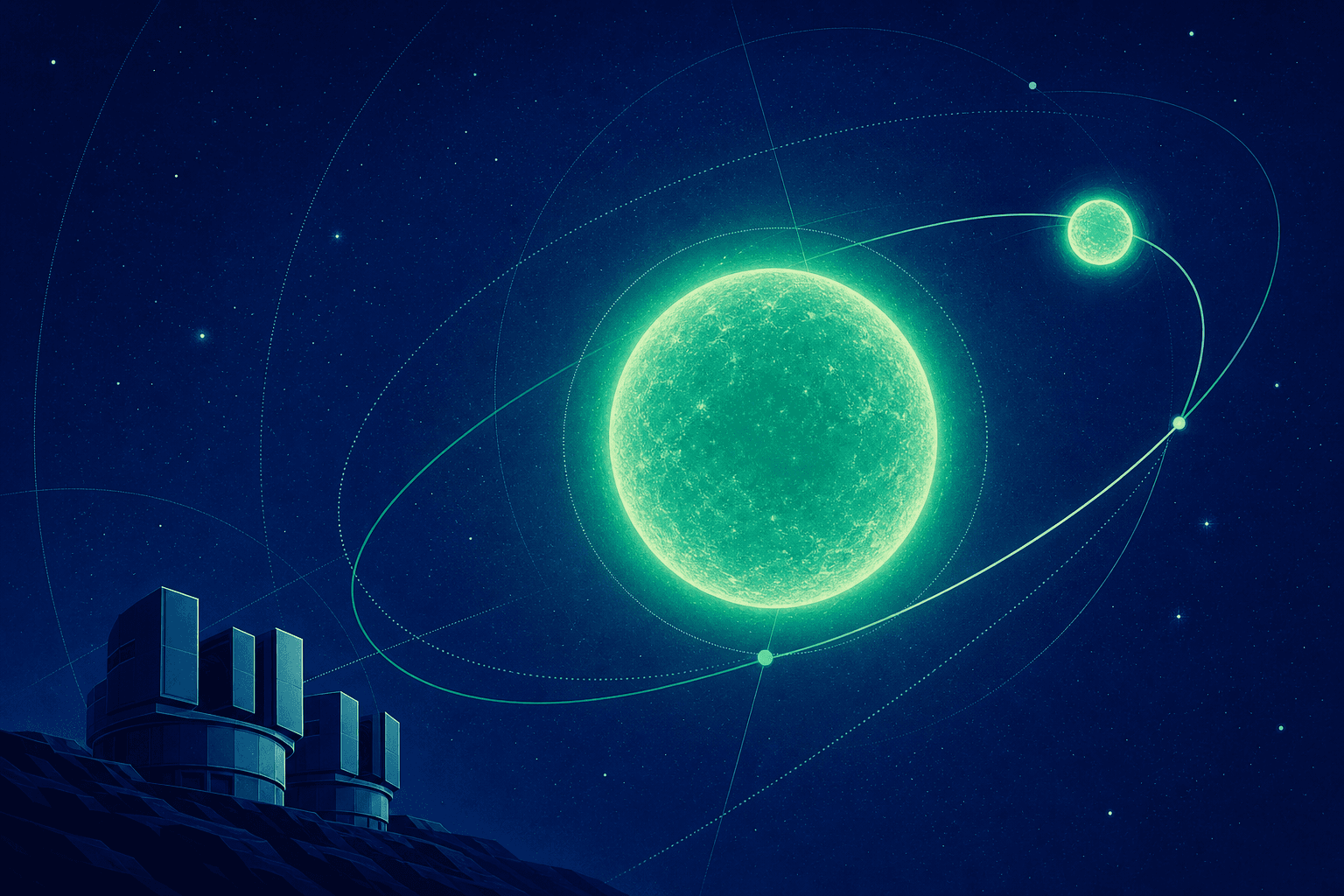
Astronomers Confirm Detection of Companion Star Orbiting Betelgeuse
New observations from the Very Large Telescope reveal a massive companion orbiting the red supergiant, ending a century of speculation regarding the star’s nature.
No. 208
New observations from the Very Large Telescope reveal a massive companion orbiting the red supergiant, ending a century of speculation regarding the star’s nature.
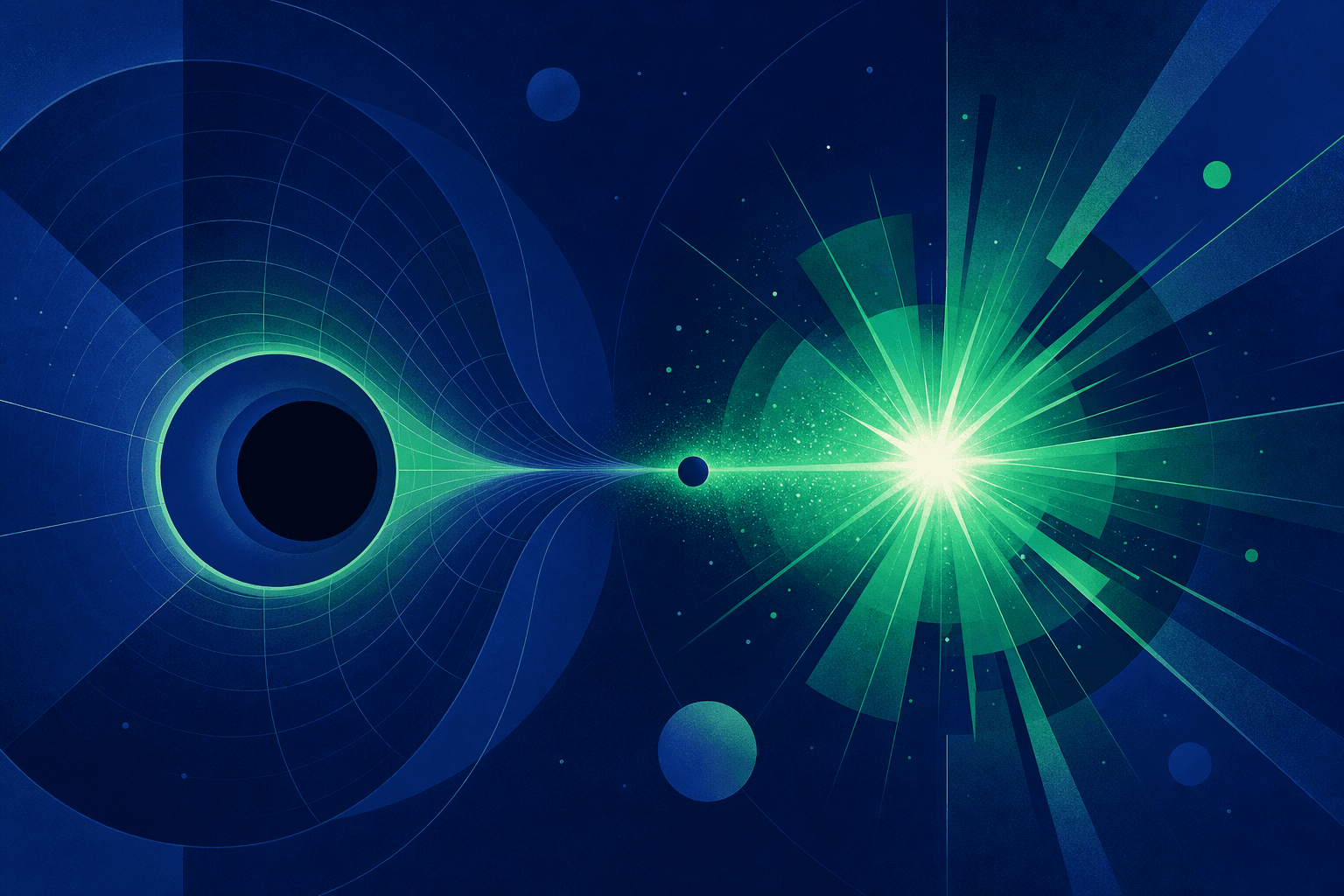
New research suggests that invisible primordial black holes could be responsible for triggering certain white dwarf explosions, leaving distinct chemical signatures in the Milky Way.
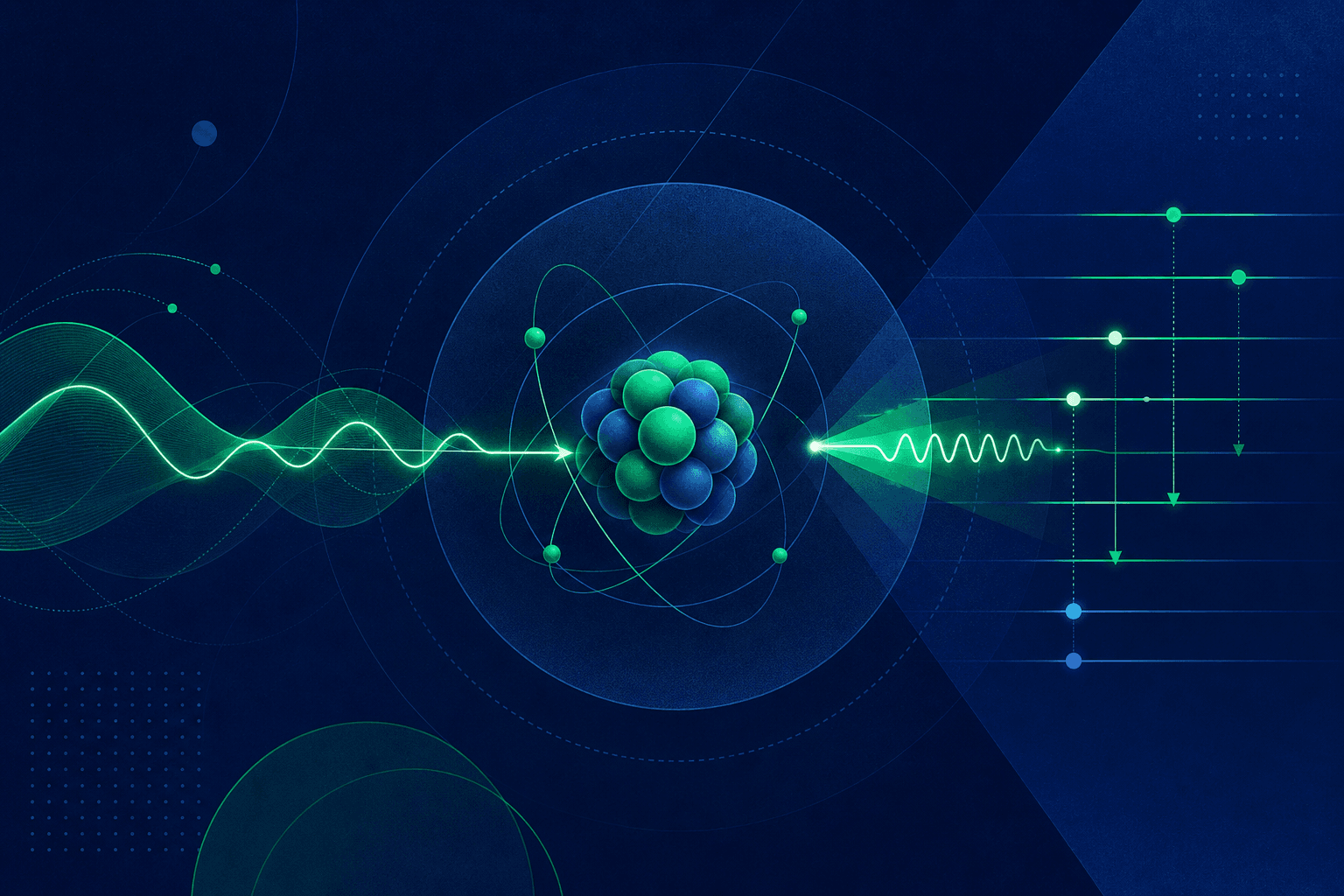
Researchers at the Facility for Rare Isotope Beams have resolved a long-standing mystery regarding gamma-ray emissions in atomic nuclei.

The detection of escaping helium on a distant rocky world provides new evidence that terrestrial planets can maintain stable atmospheres in habitable zones.

Astronomers have identified a third giant planet orbiting the young star Beta Pictoris by isolating its unique atmospheric chemical signature from dense surrounding debris.
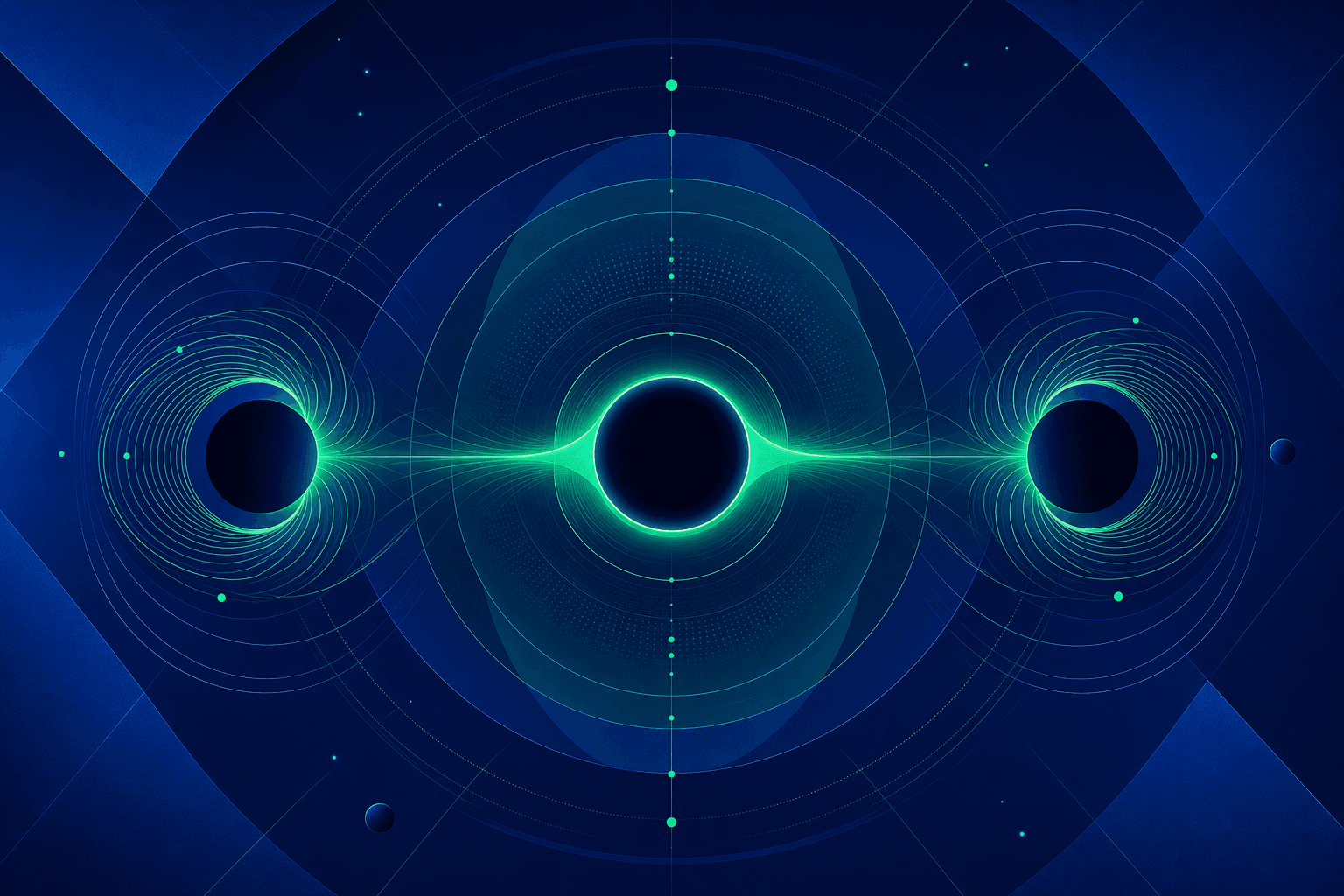
Researchers have identified a maximum entropy rule that accurately forecasts the mass and spin of remnant black holes following cosmic collisions.

A mathematician has utilized a large language model to identify a counterexample to a century-old problem in algebraic geometry, signaling a shift in computational research.

A new frontier model from Anthropic has successfully identified a counterexample to a long-standing problem in algebraic geometry, sparking debate among mathematicians.
New kinematic data from the James Webb Space Telescope confirms the mechanism that sustains active galactic nuclei by funneling cold gas into circumnuclear disks.

Researchers have successfully demonstrated a laboratory-based method to replicate the Penrose-Zel’dovich process, using synthetic rotation to extract energy from electromagnetic waves.