Agricultural researchers have identified a specific sweetpotato gene, IbHIPP7, that actively restricts the uptake and accumulation of toxic cadmium in the plant’s edible roots and shoots. The discovery, detailed in a December 8, 2025 publication, provides a precise molecular mechanism for protecting vital food crops from heavy metal contamination in polluted agricultural soils.
A joint research team from Nanjing Agricultural University and the University of Tokyo published their findings in the journal Horticulture Research, demonstrating the gene’s ability to fortify cellular boundaries against severe environmental stress. Initial expression profiling revealed that IbHIPP7 is naturally cadmium-inducible, maintaining a primary presence in the leaves while exhibiting strongly stimulated expression in the petioles upon exposure to the toxic metal.
Subcellular localization experiments further pinpointed the IbHIPP7 protein directly to the plasma membrane, placing it at the critical strategic boundary for controlling metal influx into the plant’s cells. By operating at this cellular perimeter, the protein actively intercepts toxic elements before they can penetrate the cytoplasm and disrupt vital metabolic processes.
To isolate the gene’s direct detoxification capabilities, researchers first expressed it in laboratory yeast models. The genetic modification successfully enhanced overall cadmium tolerance in the yeast and drove a 40 percent reduction in intracellular cadmium content.
Domain analysis provided an essential mechanistic clue by isolating the genetic efficacy to two specific heavy metal-associated, or HMA, domains. The structural breakdown confirmed that these two HMA domains were strictly essential for establishing cadmium tolerance, whereas the gene’s C-terminal isoprenylation motif played no required role in the detoxification process.
The researchers also confirmed the gene’s high functional specificity, demonstrating its capacity to detoxify cadmium without inadvertently blocking essential divalent metals such as copper, manganese, zinc, or iron. Moving from cellular models to complex organisms, the team overexpressed IbHIPP7 in both Arabidopsis and transgenic sweetpotato plants cultivated in heavily cadmium-contaminated soil.
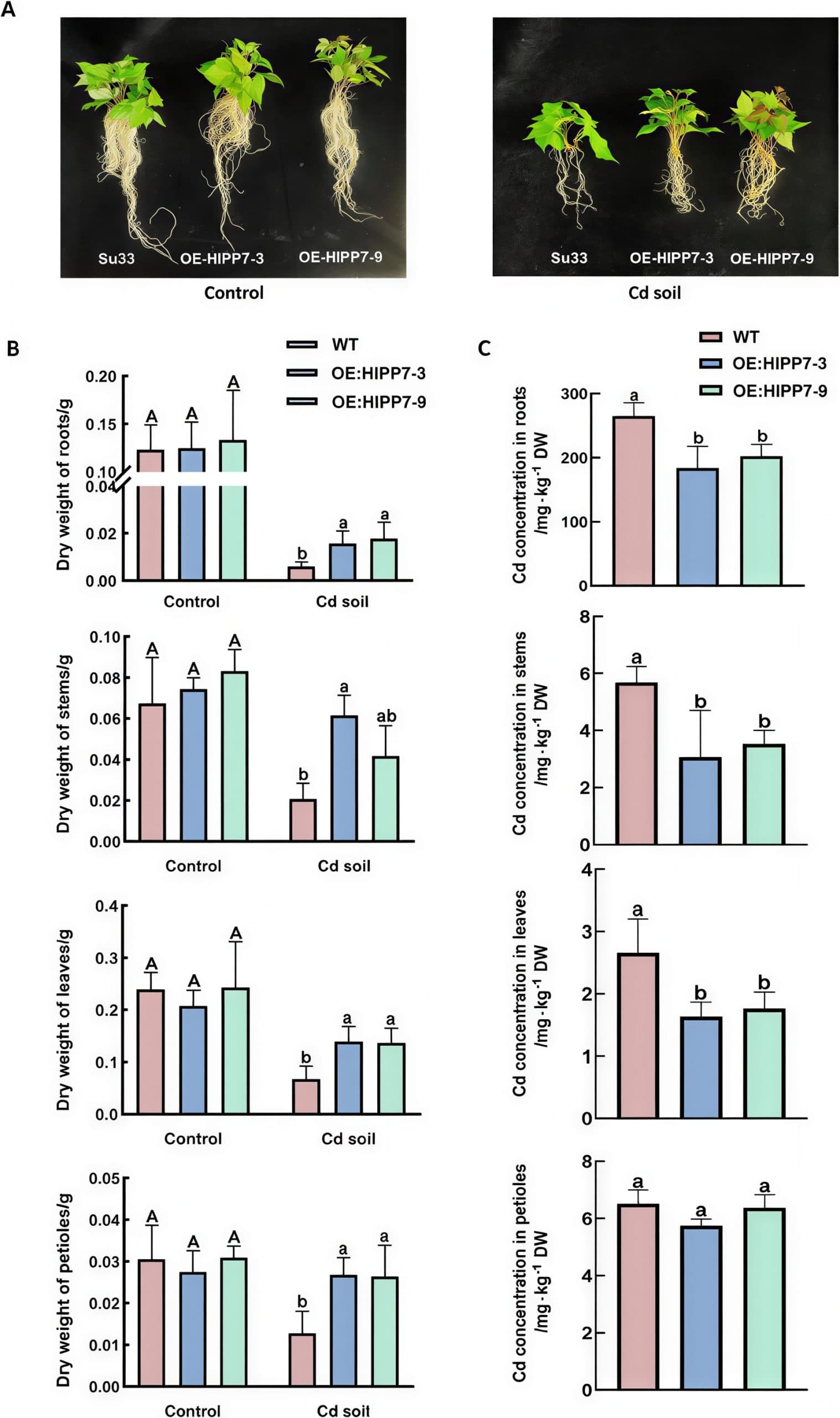
In these whole-plant systems, the genetic modification actively weakened cadmium influx at the root level, preserving vital leaf greenness and limiting cellular degradation caused by reactive oxygen species. By mitigating this reactive oxygen species damage, the overexpressed gene significantly improved overall plant growth and physiological health despite the presence of severe soil toxicity.
Quantitative analysis of the whole sweetpotato plants showed dramatic reductions in toxic accumulation across all primary tissue structures. Following the introduction of the gene, cadmium concentrations fell by 28 percent in the roots, 42 percent in the stems, and 38 percent in the leaves.
Because sweetpotato cultivars are globally significant staple crops cultivated for both their starchy roots and nutrient-dense leafy shoots, mitigating heavy metal transport is critical for ensuring human dietary safety. Cadmium pollution in farmland presents a unique biological threat to vegetable-type plants, as the toxic metal readily enters the root system and migrates upward through the vascular network.
Once inside the plant’s vascular system, the cadmium accumulates heavily in the exact aboveground organs harvested for human consumption. “This study turns IbHIPP7 from a candidate gene into a convincing functional target for crop safety,” the research team stated in their report.
By validating the gene’s consistent performance across multiple biological systems—from yeast and Arabidopsis to hairy roots and whole plants—the scientists established a highly persuasive biological baseline. This cross-system consistency gives the genetic discovery immediate translational value for modern agricultural engineering.
The findings clarify the previously ambiguous role of the heavy-metal-associated isoprenylated plant protein, or HIPP, gene family in sweetpotato biology. The comprehensive data confirms the gene family’s direct involvement in heavy-metal detoxification, moving beyond earlier research that merely showed a passive association with environmental stress.
Unlocking this specific molecular pathway offers agricultural scientists a precise mechanism to address the intersection of progressive soil degradation and global food security. The research yields critical new insights into how plants regulate toxic metal entry at the cellular boundary, providing a biologically grounded starting point for future crop modifications.
The definitive identification of IbHIPP7 equips plant breeders with a targeted genetic resource to develop new, low-cadmium sweetpotato cultivars specifically engineered for marginal or polluted agricultural environments. As global soil contamination pressures continue to mount, integrating this molecular trait could ensure that essential staple crops remain both highly productive and safe for human consumption.

